How vape temperature regulation affects aerosol consistency
Time
Click Count
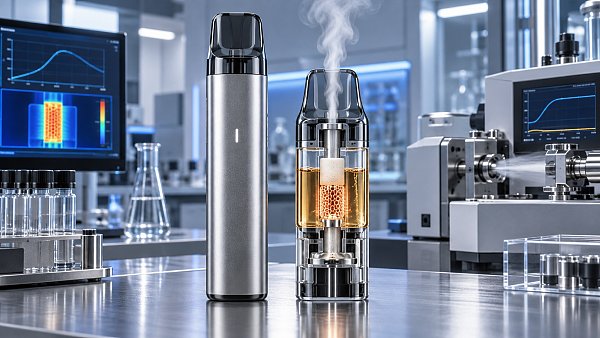
Vape temperature regulation affects aerosol consistency because the heater does not operate in isolation. Its temperature changes the rate at which e-liquid is vaporized, the ability of the wick or porous ceramic to replenish liquid, and the thermal stress placed on the coil and surrounding materials. A device can produce a satisfactory aerosol during a short bench check yet become inconsistent across repeated puffs, changing battery voltage, or different liquid batches if its heating control is poorly matched to the rest of the system.
For product validation, the question is not simply whether a device reaches a selected temperature. The more useful question is whether the device maintains a repeatable thermal condition at the vaporization surface while liquid supply, electrical input, and airflow vary within their intended operating ranges. That repeatability is what supports stable aerosol mass, constituent profiles, puff-to-puff output, and batch-to-batch manufacturing quality.
Temperature is a control variable, not a direct aerosol specification
A displayed or programmed temperature is usually an indirect representation of the condition at the liquid-heater interface. Most vape temperature regulation systems estimate temperature through a sensor, a resistance-temperature relationship, or a model based on power delivery and time. Each method has limits. The measurement point may be separated from the hottest part of the heating surface, and the thermal response of the coil, ceramic substrate, liquid film, and airflow can introduce delay.
This distinction matters because aerosol formation occurs where the liquid contacts the heated surface. If the control system sees a lower temperature than the actual local surface temperature, it may continue applying energy after the liquid film has become thin. If it sees a higher temperature than the active vaporization zone, it may reduce power too early and produce weak or variable aerosol. A stable control trace does not automatically prove stable vaporization.
Temperature regulation therefore needs to be evaluated as part of a coupled system:
- Electrical input: battery voltage, cell internal resistance, firmware power limits, and switching behavior determine how quickly heat is added.
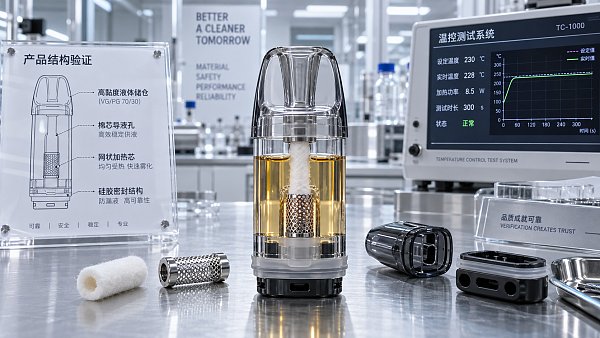
- Heater structure: coil material, trace geometry, mesh pattern, electrical resistance, and ceramic mass affect heating distribution and response time.
- Liquid delivery: wick density, ceramic porosity, inlet geometry, reservoir pressure, and liquid viscosity determine whether fresh liquid reaches the heater.
- Airflow: air removes heat and carries aerosol away; changes in draw profile can alter the effective thermal load.
- Control logic: sampling rate, sensor interpretation, ramp strategy, power cutback, and protective limits govern how the device reacts to disturbance.
When these elements are aligned, regulation narrows output variation. When they are treated separately, temperature control can mask a liquid-delivery or assembly problem without resolving it.
What consistent aerosol generation actually means
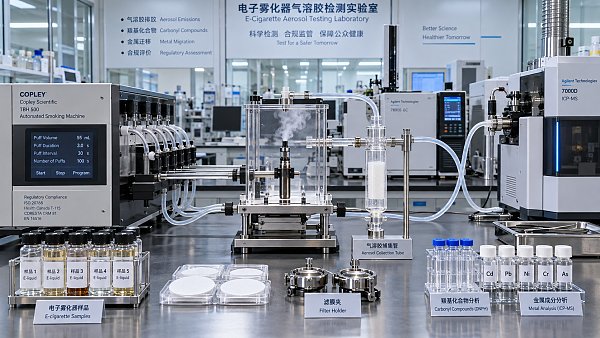
Aerosol consistency should not be reduced to visible vapor density. Visual appearance is influenced by lighting, particle size, and airflow, while a technically meaningful assessment considers repeatability across a defined operating protocol. Depending on the product and assessment purpose, the relevant outputs may include aerosol collected mass, aerosol-per-puff variation, pressure-drop behavior, device-to-device output, liquid consumption, and chemical test results.
The intended puff regime must be defined before comparing devices. Puff duration, interval, flow rate, orientation, preconditioning, and the point in product life all change the thermal balance. A device may appear regulated under a low-duty cycle but exhibit power oscillation or incomplete rewetting during consecutive puffs. Likewise, a result taken near the start of reservoir life may not represent behavior as liquid level, internal pressure, battery state, or component temperature changes.
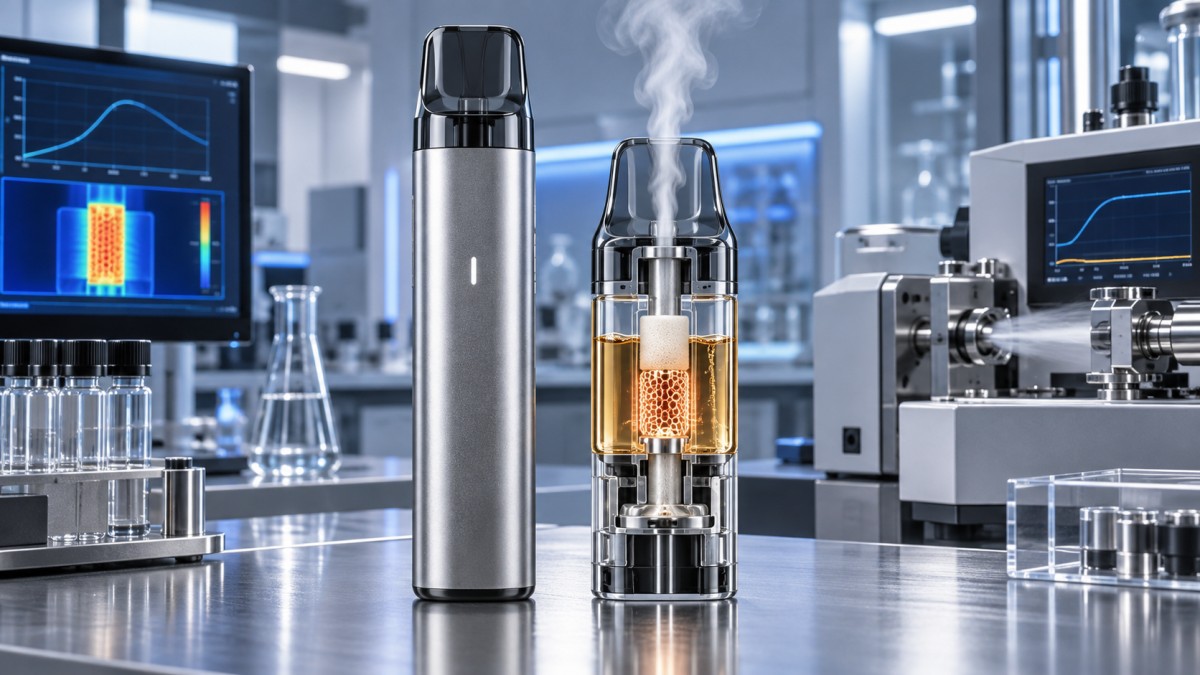
The table also shows why a single temperature number is a weak quality target. A program can set the same nominal target across devices while actual vaporization differs because material tolerances or fluidics differ. Consistency requires an acceptable output window under a realistic test sequence, not merely matching firmware settings.
Heating ramp and recovery are often more important than the target setpoint
A temperature target receives most of the attention, but the route to that target is frequently more consequential. Fast power application can shorten warm-up time, yet it also increases the chance that the heater briefly outruns liquid replenishment. Slow ramping may reduce thermal overshoot, but it can create underpowered early puffs or leave the device overly sensitive to changing draw behavior.
A well-tuned system applies enough initial energy to establish vaporization, then transitions to a holding strategy that accounts for heat loss and liquid phase change. The transition must happen at the right time. A control loop that waits for a remote temperature estimate can overshoot at the actual surface; a loop that cuts power too aggressively can produce cyclical peaks and troughs in aerosol output.
Recovery between puffs deserves the same scrutiny. During the interval, the heater cools, liquid redistributes through the wick or porous ceramic, and the battery relaxes. A device tested only with isolated puffs may look stable even though the liquid transport system cannot recover under normal repeated use conditions. A repeated-puff protocol is therefore useful for exposing whether regulation remains effective when heat accumulation and replenishment occur together.
Liquid properties can change the meaning of the same temperature setting
E-liquid is not a fixed thermal load. Differences in solvent balance, nicotine formulation, flavor composition, viscosity, surface tension, and dissolved materials can alter both wicking and vaporization behavior. Even small formulation changes may affect how rapidly a liquid travels through a porous path or how it spreads across a heater. The result is that a control profile optimized for one formulation may not deliver the same aerosol consistency with another.
This is especially relevant when a platform supports multiple formulations or regional variants. Treating the coil and firmware as fixed while changing liquid characteristics can create avoidable validation gaps. The evaluation should include representative formulation boundaries, including liquids more difficult to transport through the intended wick or ceramic structure. The goal is not to prove identical performance under every imaginable condition, but to establish that the regulated heating strategy remains within the intended product envelope.
Reservoir and filling conditions matter as well. Entrapped air, inconsistent fill volume, seal compression, pod pressure changes, or leakage pathways can affect liquid delivery. If output changes are attributed only to temperature regulation, a fluidics failure may be overlooked. Separating electrical, thermal, and liquid-delivery investigations makes root-cause analysis much more reliable.
Why heater design changes the effectiveness of regulation
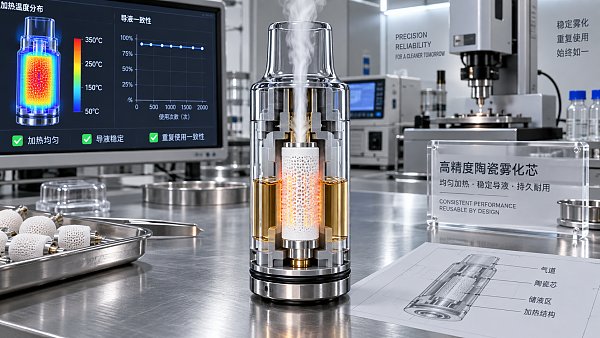
Temperature regulation works best when the heater has a predictable thermal response. A highly non-uniform heating pattern creates localized hot areas that may not be represented by the sensed temperature or average resistance. Mesh heaters can distribute energy across a larger area, while ceramic heating systems can provide a porous liquid interface and thermal mass; neither architecture is automatically more consistent. Performance depends on the interaction between geometry, material quality, liquid pathway, and the chosen control method.
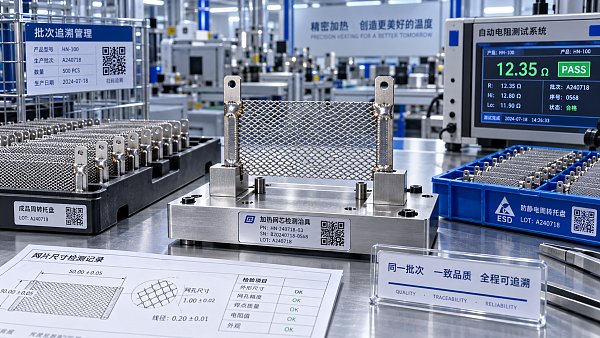
For resistance-based estimation, manufacturing variation in the heater material and electrical connections can affect temperature inference. Connection resistance, weld quality, trace consistency, and aging can all shift the relationship between measured electrical behavior and actual temperature. That makes incoming inspection and process control relevant to aerosol consistency, not just component yield.
Porous ceramic systems introduce another consideration: their apparent stability can be influenced by liquid saturation history. A ceramic element may retain liquid differently after storage, transport, or repeated cycling. Validation should therefore account for preconditioning and test orientation where these conditions are relevant to the intended design. A stable first-use result is not sufficient evidence of stable lifecycle behavior.
Testing vape temperature regulation as a system
A practical assessment starts by defining the intended use envelope, then testing the device at the conditions most likely to reveal instability. The following sequence is more useful than relying on nominal power or a single regulated-temperature claim.
- Confirm the measurement basis. Identify whether control relies on direct sensing, resistance estimation, timed power profiles, or a hybrid approach. Record where the measurement represents the thermal system and where it does not.
- Characterize the electrical response. Observe power delivery during startup, steady operation, repeated puffs, and lower battery conditions. Sudden power limiting or unstable switching can appear as aerosol variation.
- Test liquid-delivery boundaries. Include representative liquid viscosity and formulation conditions, along with orientations and puff sequences that challenge rewetting.
- Measure output across product life. Compare early, mid-life, and later operating points rather than treating one collected aerosol sample as representative.
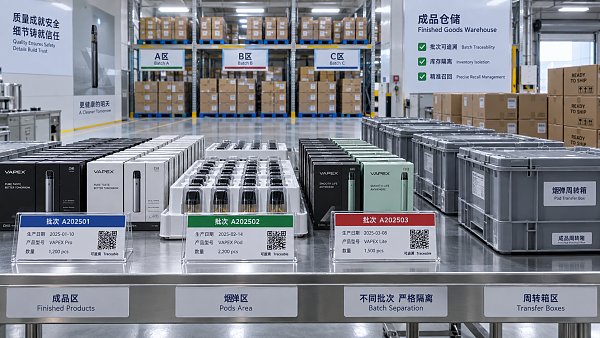
- Compare units and production lots. A well-regulated prototype does not establish manufacturing repeatability. Component tolerances and assembly variation need to be reflected in the sample plan.
- Link anomalies to physical evidence. When output shifts, inspect heater condition, wick or ceramic saturation, electrical connections, seals, and airflow leakage before changing firmware settings.
This approach also produces better technical documentation. A clear record of test conditions, device configuration, liquid identity, battery state, puff regimen, collected output, and observed failure modes allows results to be reviewed across engineering, quality, and compliance functions. It is more defensible than a broad statement that a device has “stable temperature control.”
Common evaluation mistakes
Equating a low coil-temperature variation with stable aerosol. Temperature variation may be small at a sensor or modeled point while the liquid interface experiences dry spots or uneven heating. Aerosol and component evidence should be reviewed alongside thermal data.
Validating only at a fully charged state. Battery behavior can change available power and controller headroom. Regulation needs to be assessed across the product’s intended battery operating range, with battery protection functions considered as part of the response.
Using a single puff protocol for every question. A standard laboratory regimen can support comparability, but it may not expose all engineering failure modes. Supplemental stress sequences are useful when examining rewetting, thermal accumulation, or power recovery.
Correcting every inconsistency through firmware. Firmware can compensate for predictable variation, but it cannot reliably solve poor wetting, inconsistent heater manufacture, air leakage, or unsuitable liquid paths. Excessive control intervention may also create a device that is sensitive to minor component changes.
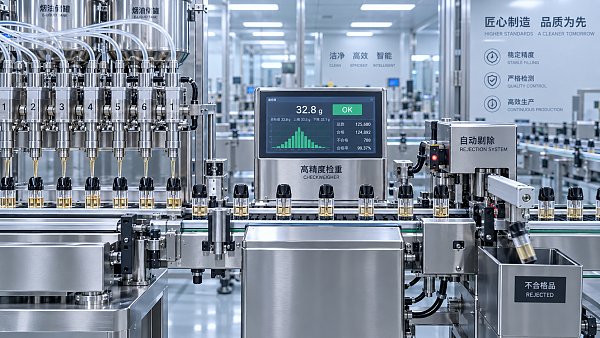
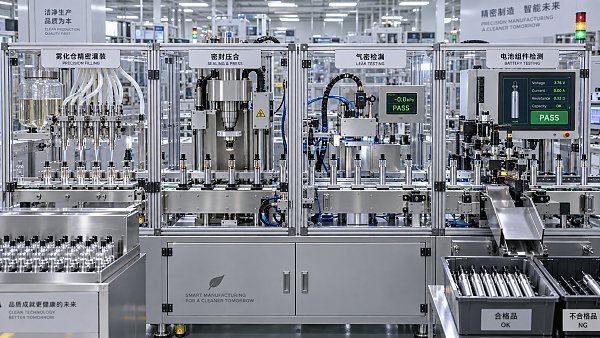
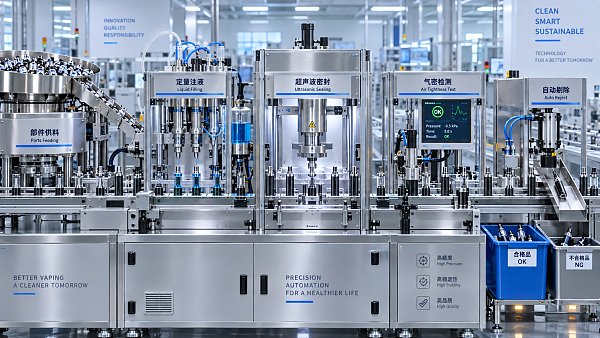
Ignoring the production process. Filling variation, improper seals, resistance drift, incomplete welding, or handling damage can alter conditions that the control logic assumes are stable. Temperature regulation is a design feature, but aerosol consistency is a system-level quality outcome.
What to confirm before accepting a regulated heating design
The most useful acceptance question is whether the control strategy remains repeatable under foreseeable variation, not whether it performs well in one ideal setup. Review the temperature-control method, heater uniformity, liquid transport capacity, battery-power behavior, airflow integrity, and the test conditions used to demonstrate output consistency. Where the device uses a new coil, ceramic substrate, e-liquid, or firmware version, the interaction should be reassessed rather than assuming prior results transfer unchanged.
For organizations reviewing component suppliers or finished devices, technical evidence should connect the regulated heating claim to aerosol testing, manufacturing controls, and traceable configuration management. Resources that bring together vaporization components, filling technologies, aerosol analysis, battery safety, and regulatory documentation can help keep that review connected. EVTS addresses these linked areas because a thermal-control claim has limited value when it is separated from the liquid, battery, assembly, and testing conditions that determine real aerosol behavior.
A regulated device is not necessarily a consistent device. Consistency emerges when the thermal controller, heating element, liquid pathway, power source, and production process remain aligned through the conditions the product is designed to handle.
Recommended News
 Sep 28, 2026How vape temperature regulation affects aerosol consistencyProf. Elena Sterling
 Sep 27, 2026How HPHC analysis for aerosols supports PMTA submission qualityToxicology & Compliance Fellow
 Sep 25, 2026How to build a vape distribution channel strategy for new marketsMr. Julian Thorne
 Sep 24, 2026How fill-weight accuracy affects output on an automated vape filling lineVape Production Strategist
 Sep 28, 2026What to Check Before Buying an Automated Vape Assembly LineVape Production Strategist
 Sep 28, 2026How Ceramic Coils Affect Vapor Consistency Over Repeated UseAerosol Fluidics Scientist
 Sep 27, 2026Which Vape Aerosol Test Results Matter Most for Compliance Review?Toxicology & Compliance Fellow
 Sep 27, 2026How Batch Traceability Supports Vape Product RecallsMr. Julian Thorne
 Sep 26, 2026Does a Higher VG Ratio Increase Dry-Hit or Leakage Risk?Aerosol Fluidics Scientist
 Sep 26, 2026How to Assess a Vape Manufacturer’s Quality Control ReliabilityMr. Julian Thorne
 Sep 25, 2026Which Vape Export Regulations Should Manufacturers Monitor in 2026?Dr. Silas Vance
 Sep 25, 2026What Leak Detection System Is Best for Automated Vape Production Lines?Vape Production Strategist
 Sep 24, 2026Are Ceramic Heating Elements Suitable for High-Volume Vape Production?Thermal Pyrolysis Expert
 Sep 24, 2026How to Reduce Lithium Battery Short-Circuit Risks in Vape DevicesToxicology & Compliance Fellow
 Sep 22, 2026What to check before choosing a mesh coil heating factoryAerosol Fluidics Scientist
 Sep 21, 2026What TPD compliance should a vape OEM ODM partner in Europe provide?Dr. Silas Vance
 Sep 20, 2026What should you verify before choosing a vape ODM company?Mr. Julian Thorne
 Sep 19, 2026What drives the cost of an automated vape assembly line?Vape Production Strategist
 Sep 18, 2026Are heated tobacco products in Germany regulated under the TPD?Dr. Silas Vance
 Sep 17, 2026What to verify before choosing a heated tobacco stick manufacturerThermal Pyrolysis Expert
 Sep 16, 2026What vaping industry intelligence reveals about smart disposable vape demandVaping Hardware Architect
 Sep 15, 2026How to assess a nicotine delivery technology supplier’s PMTA testing capabilityToxicology & Compliance Fellow
 Sep 14, 2026What should a vape risk management supplier audit verify?Dr. Silas Vance
 Sep 12, 2026How TPD rules shape e-liquid formulation science in EuropeDr. Silas Vance