FDA Tightens PMTA HPHCs Testing Method
Time
Click Count
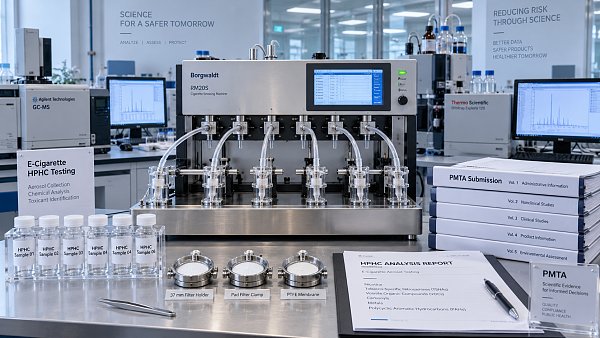
On July 11, 2026, the U.S. FDA released the PMTA Scientific Assessment Supplementary Guidance (v3.2), clarifying that all HPHCs testing must be based on aerosol condensate collected under real user puffing conditions rather than static heating or simulated airflow methods. This update matters directly to manufacturers preparing PMTA submissions, laboratories involved in test design and execution, and export-oriented companies that rely on third-party testing capacity, particularly where data acceptability and compliance readiness are tied closely to external service providers.
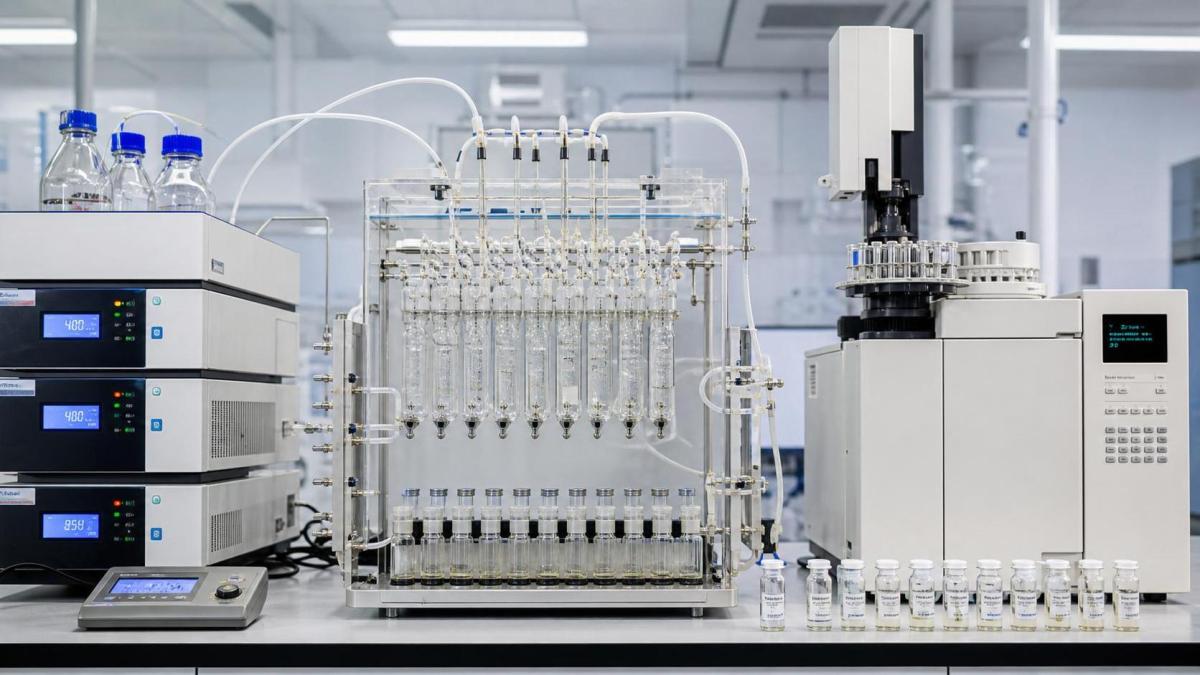
What the FDA Clarified in v3.2
The confirmed change is specific to how HPHCs testing must be conducted for PMTA-related scientific evaluation. According to the information provided, the FDA now requires the use of aerosol condensate collected under real user puffing patterns. Methods based on static heating or simulated airflow are no longer the required basis for this testing approach. The update was issued on July 11, 2026, through the PMTA Scientific Assessment Supplementary Guidance (v3.2).
The information provided also makes clear that this change affects three practical areas of PMTA preparation: test protocol design, laboratory selection, and the acceptability of submitted data. It further indicates a higher compliance threshold for export companies that depend on third-party testing institutions in China.
Where the Pressure Will Be Felt First
For manufacturers preparing PMTA dossiers
From an industry perspective, manufacturers are likely to feel the impact first because the testing method sits at the foundation of submission planning. If HPHCs data must come from aerosol condensate captured under real use conditions, protocol design, sample preparation, and supporting documentation all become more sensitive to methodological alignment with the updated FDA expectation.
For testing laboratories and service providers
Laboratories and technical service providers may be affected because the update shifts attention from general testing capability to method suitability under the FDA's clarified standard. The practical issue is not only whether a lab can conduct HPHCs testing, but whether its collection and testing approach matches the required real puffing-condition basis and can support data acceptability in a PMTA context.
For export businesses relying on third-party testing in China
Observably, companies that outsource testing to third-party laboratories in China face a more immediate compliance challenge. The information provided specifically points to a higher regulatory threshold for these exporters. The core concern is likely to center on whether existing testing arrangements, documentation flows, and delivery timelines remain usable under the revised FDA expectation.
What Companies Should Track Now
Check whether current test plans still match the clarified method
What deserves closer attention is whether ongoing or planned HPHCs testing programs are built around aerosol condensate collected under real user puffing conditions. For companies already in preparation, the key issue is whether previously designed methods still align with the updated guidance or create a data acceptance risk.
Reassess laboratory qualification beyond basic capacity
Companies should look closely at laboratory selection through the lens of PMTA data acceptability. Analysis shows that the practical question is no longer limited to turnaround time or standard analytical capability. The more important point is whether the laboratory's methodology, records, and execution basis can support the FDA's clarified requirement in a submission setting.
Separate policy language from operational readiness
It is more appropriate to understand this update as a technical compliance requirement with operational consequences, not just a wording revision in guidance. Businesses should therefore distinguish between understanding the policy text and being able to implement it across testing, documentation, supplier coordination, and customer communication.
Prepare for longer internal coordination cycles
Where testing is outsourced or spread across multiple partners, companies should pay attention to communication chains, document consistency, and scheduling risk. If a testing pathway needs to be redesigned around real puffing-condition aerosol condensate collection, the effect may extend to submission preparation timelines and coordination with clients or downstream compliance teams.
Why This Looks Like More Than a Minor Technical Edit
Analysis shows that this is not simply a narrow laboratory instruction. The requirement ties test methodology directly to the credibility and acceptability of PMTA submission data. That makes the update relevant not only to analysts and regulatory teams, but also to commercial operators whose market access depends on the quality and usability of externally generated evidence.
At the same time, it is more appropriate to understand this as a clear regulatory signal rather than a fully measurable market outcome. The information provided confirms a change in FDA expectations and points to a higher compliance threshold, but it does not by itself establish how quickly all affected businesses or laboratories will adapt. Continued observation is therefore still necessary.
How This Update Is Best Understood at This Stage
At this stage, the update is best read as a concrete tightening of PMTA testing expectations with immediate implications for method selection and data planning. Its importance lies less in headline impact and more in the fact that technical details now carry clearer consequences for whether submission data will be considered acceptable. For affected companies, this is a near-term compliance issue and also a longer-term signal that methodological scrutiny in PMTA preparation remains a live regulatory focus.
Basis of This Article and What Still Needs Verification
This article is based on the user-provided news title, event date, and event summary. For developments of this type, commonly relevant source categories may include official regulatory announcements, company disclosures, industry association updates, authoritative media coverage, and standards-related documents. A specific official source link was not provided in the input, so the exact publication record still needs continued verification. Follow-up attention should remain on any further FDA wording updates, method-related implementation details, and how laboratories and submitting companies interpret the requirement in practice.
Recommended News
 Oct 27, 2026How tobacco stick manufacturing affects draw resistance consistencyProf. Elena Sterling
 Oct 27, 2026China’s Q3 2026 E-Cigarette Exports Reach $2.859 Billion as UK Shipments Rise 21.6%Mr. Julian Thorne
 Oct 26, 2026When does child-resistant packaging compliance require retesting?Toxicology & Compliance Fellow
 Oct 25, 2026How to factor e-liquid tax into a German vape market entry strategyMr. Julian Thorne
 Oct 25, 2026UK Retailers Warned to Prepare for Vape Age Restrictions Taking Effect on 29 OctoberDr. Silas Vance
 Oct 24, 2026How to set leak detection thresholds for vape pod systemsVape Production Strategist
 Oct 23, 2026What documents verify FDA authorization for vapes sold in the US?Dr. Silas Vance
 Oct 23, 2026Indiana Lifts Restrictions on 334 MR FOG and Lost Mary Products; Elf Bar Still BannedMr. Julian Thorne
 Oct 22, 2026How to assess data quality in a vaping industry intelligence platformMr. Julian Thorne
 Oct 22, 2026PMI Q3 2026 Revenue Hits Record as Smoke-Free Share Tops 40% and IQOS GainsThermal Pyrolysis Expert
 Oct 21, 2026Is a vape certification body required to sell vapes in the UK?Dr. Silas Vance
 Oct 21, 2026Macau Passes Tobacco Law Amendment to Ban E-Cigarettes and New Tobacco ProductsDr. Silas Vance
 Oct 20, 2026How do viscosity changes affect e-liquid filling accuracy?Vape Production Strategist
 Oct 20, 2026Pennsylvania Enforces ENDS Directory Restrictions; Unlisted Products Face SeizureDr. Silas Vance
 Oct 19, 2026How to test vape flavor stability to establish e-liquid shelf lifeAerosol Fluidics Scientist
 Oct 18, 2026How to detect seal leaks during vape component quality testingVape Production Strategist
 Oct 17, 2026How sampling delay affects particle size in aerosol stability testingProf. Elena Sterling
 Oct 16, 2026How to assess demand forecasts in a vaping industry intelligence reportMr. Julian Thorne
 Oct 15, 2026How minimum order quantities affect disposable vape wholesale costsMr. Julian Thorne
 Oct 14, 2026How seal compression affects leak-resistant pod system designVaping Hardware Architect
 Oct 13, 2026What HPHC documentation is required for a vape PMTA submission?Toxicology & Compliance Fellow
 Oct 12, 2026How to assess a vape environmental design manufacturer’s compliance supportDr. Silas Vance
 Oct 10, 2026How to assess nicotine delivery systems compliance before market entryDr. Silas Vance
 Oct 09, 2026How to determine whether child resistant testing meets TPD requirementsToxicology & Compliance Fellow