FDA Tightens PMTA HPHCs Data Requirements
Time
Click Count
On August 9, 2026, the U.S. FDA released the PMTA Scientific Review Supplemental Guidance (v3.2), adding a more detailed documentation requirement for HPHCs testing in PMTA submissions. For companies involved in e-vapor products and HNB device exports to the United States, this update is worth close attention because it shifts the compliance focus from test results alone to the underlying laboratory evidence, with direct implications for OEM/ODM manufacturers in China and for importers responsible for supplier review.

What the FDA Changed in the Latest Guidance
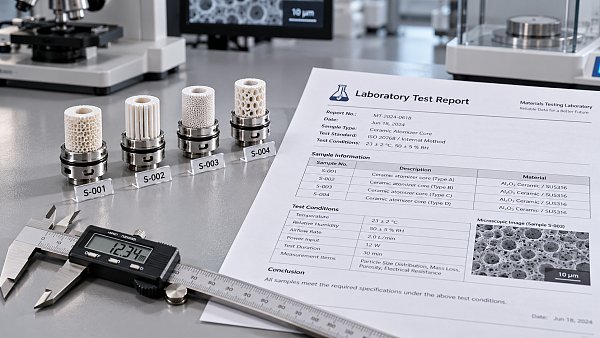
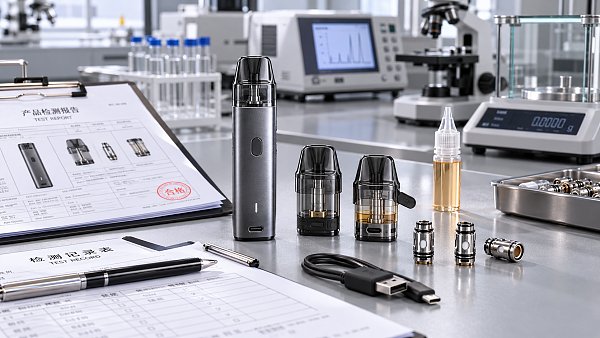
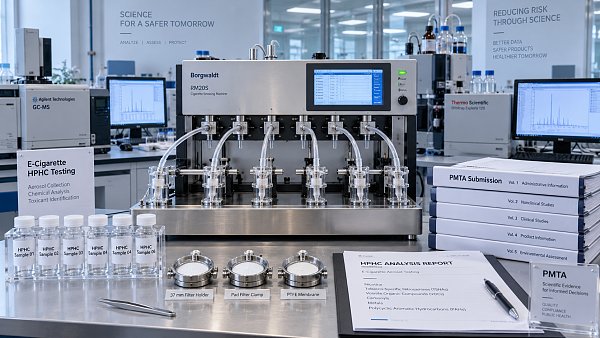
According to the information provided, the FDA now requires that all HPHCs testing reports submitted in PMTA applications include original instrument spectra, calibration records, and a complete uncertainty assessment.
The guidance further specifies that these materials must be issued by laboratories accredited to ISO/IEC 17025. This requirement was released on August 9, 2026, as part of the PMTA Scientific Review Supplemental Guidance (v3.2).
The confirmed impact stated in the source information is that this change directly affects the compliance pathway for Chinese OEM/ODM manufacturers exporting electronic atomization products and HNB devices to the U.S. market. It also means importers need to re-check supplier testing qualifications and the completeness of submitted reports.
Where the Pressure Will Be Felt Across the Supply Chain
Export-oriented manufacturers may face a documentation gap
From an industry perspective, Chinese OEM/ODM manufacturers serving the U.S. market are likely to be affected first because PMTA-related testing packages will now need to show not only the reported findings but also the underlying laboratory records. The immediate pressure point is in compliance preparation, especially where existing files were built around summary reports rather than full raw-data support.
Importers will need to review supplier controls more closely
For importers, the change matters at the supplier management level. The provided information makes clear that importers need to reassess both testing qualifications and report completeness. In practical terms, what deserves closer attention is whether supplier-submitted HPHCs reports can be traced back to an ISO/IEC 17025-accredited laboratory and whether the accompanying evidence set is complete enough for submission use.
Testing and compliance service workflows may become more document-intensive
Analysis shows that the operational impact is not limited to the laboratory result itself. Businesses involved in submission preparation, document collection, and compliance coordination may need to spend more time confirming that spectra, calibration records, and uncertainty evaluations are all available in a usable format. The issue here is less about adding a new product category and more about raising the documentation threshold for an existing regulatory process.
What Companies Should Check Now
Verify the laboratory basis behind each HPHCs report
Companies with PMTA-linked products should review whether their current HPHCs reports are supported by an ISO/IEC 17025-accredited laboratory and whether the underlying raw materials required by the guidance can actually be obtained. A report that appears complete at summary level may still fall short if the supporting laboratory records are missing.
Separate commercial delivery documents from submission-grade evidence
Observably, one practical risk is treating routine supplier paperwork as equivalent to submission-ready regulatory evidence. Firms should distinguish between documents sufficient for trade transactions and documents sufficient for PMTA review, especially where raw spectra, calibration records, and uncertainty assessment are concerned.
Recheck supplier communication and lead-time assumptions
What deserves closer attention is whether suppliers and laboratories can provide the newly required materials within business timelines. Even where testing has already been completed, companies may need to revisit document requests, file formatting, and responsibility allocation between manufacturer, laboratory, and importer.
Keep watch on how the wording is applied in practice
Analysis shows that the published change is already specific on documentation, but businesses should still monitor whether subsequent official wording, interpretations, or submission practices further clarify how this evidence is expected to be presented in PMTA files. The distinction between a stated documentation rule and its practical review application remains important.
Why This Looks Like More Than a Minor Filing Update
This section is an editorial observation. It is more appropriate to understand this as a compliance signal with immediate procedural consequences rather than as a routine administrative edit. The update does not, based on the provided information, establish a final market outcome by itself. However, it does indicate that evidentiary depth in HPHCs testing records is becoming more central to PMTA submission quality.
Observably, the significance lies in document credibility and traceability. For market participants that rely on cross-border manufacturing and third-party testing arrangements, the added emphasis on raw data and uncertainty evaluation may expose weak points in existing handoff processes between factory, laboratory, and importer.
How to Read the Update at This Stage
At this stage, the development is best read as a concrete compliance tightening within PMTA preparation, especially for e-vapor and HNB-related export business connected to the U.S. market. It should not be overstated as a complete market reset, but it also should not be treated as a minor wording change. The more neutral conclusion is that this is a substantive documentation requirement with direct operational implications for supplier qualification, report review, and submission readiness.
Basis of This Article and What Still Needs Verification
This article is based on the user-provided news title, event date, and event summary concerning the FDA's August 9, 2026 update to the PMTA Scientific Review Supplemental Guidance (v3.2). For this type of industry development, commonly relevant source categories may include official regulatory notices, company disclosures, industry association updates, authoritative media coverage, and standards-related documents.
No specific official source link was provided in the input, so the exact official publication link still needs to be continuously verified. Follow-up attention should remain on any further official clarification, interpretive language, or implementation detail related to laboratory accreditation, raw data submission scope, and report completeness in PMTA practice.
Recommended News
 Oct 27, 2026How tobacco stick manufacturing affects draw resistance consistencyProf. Elena Sterling
 Oct 27, 2026China’s Q3 2026 E-Cigarette Exports Reach $2.859 Billion as UK Shipments Rise 21.6%Mr. Julian Thorne
 Oct 26, 2026When does child-resistant packaging compliance require retesting?Toxicology & Compliance Fellow
 Oct 25, 2026How to factor e-liquid tax into a German vape market entry strategyMr. Julian Thorne
 Oct 25, 2026UK Retailers Warned to Prepare for Vape Age Restrictions Taking Effect on 29 OctoberDr. Silas Vance
 Oct 24, 2026How to set leak detection thresholds for vape pod systemsVape Production Strategist
 Oct 23, 2026What documents verify FDA authorization for vapes sold in the US?Dr. Silas Vance
 Oct 23, 2026Indiana Lifts Restrictions on 334 MR FOG and Lost Mary Products; Elf Bar Still BannedMr. Julian Thorne
 Oct 22, 2026How to assess data quality in a vaping industry intelligence platformMr. Julian Thorne
 Oct 22, 2026PMI Q3 2026 Revenue Hits Record as Smoke-Free Share Tops 40% and IQOS GainsThermal Pyrolysis Expert
 Oct 21, 2026Is a vape certification body required to sell vapes in the UK?Dr. Silas Vance
 Oct 21, 2026Macau Passes Tobacco Law Amendment to Ban E-Cigarettes and New Tobacco ProductsDr. Silas Vance
 Oct 20, 2026How do viscosity changes affect e-liquid filling accuracy?Vape Production Strategist
 Oct 20, 2026Pennsylvania Enforces ENDS Directory Restrictions; Unlisted Products Face SeizureDr. Silas Vance
 Oct 19, 2026How to test vape flavor stability to establish e-liquid shelf lifeAerosol Fluidics Scientist
 Oct 18, 2026How to detect seal leaks during vape component quality testingVape Production Strategist
 Oct 17, 2026How sampling delay affects particle size in aerosol stability testingProf. Elena Sterling
 Oct 16, 2026How to assess demand forecasts in a vaping industry intelligence reportMr. Julian Thorne
 Oct 15, 2026How minimum order quantities affect disposable vape wholesale costsMr. Julian Thorne
 Oct 14, 2026How seal compression affects leak-resistant pod system designVaping Hardware Architect
 Oct 13, 2026What HPHC documentation is required for a vape PMTA submission?Toxicology & Compliance Fellow
 Oct 12, 2026How to assess a vape environmental design manufacturer’s compliance supportDr. Silas Vance
 Oct 10, 2026How to assess nicotine delivery systems compliance before market entryDr. Silas Vance
 Oct 09, 2026How to determine whether child resistant testing meets TPD requirementsToxicology & Compliance Fellow